We study human minds in the real world.
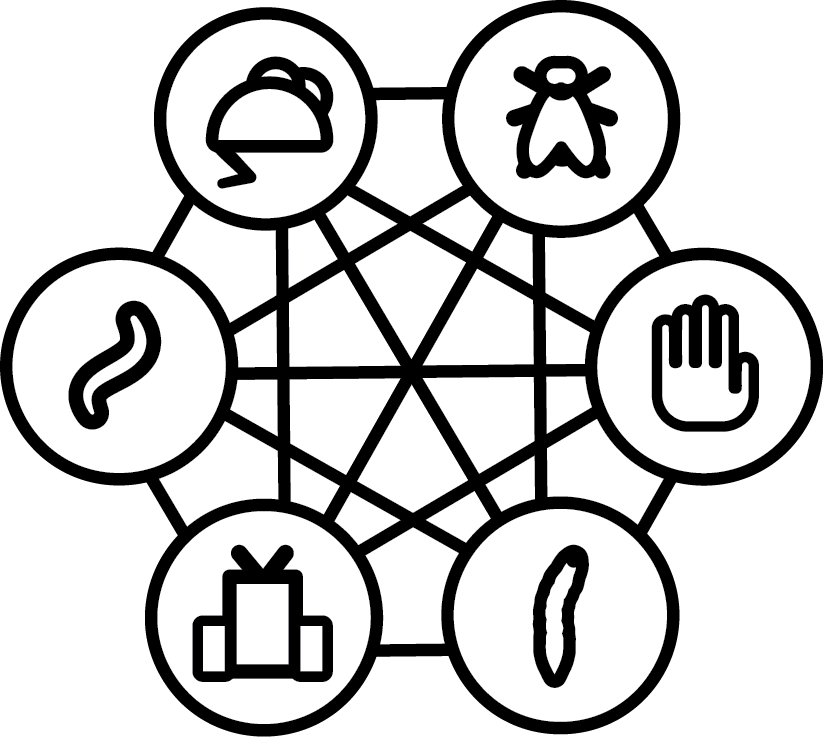
We study human minds in the real world. Our mission is complementary to the major force that drives current neuroscience, namely, the study of animal brains in the laboratory. In that sense, we are a “minority report”.
However, in the visionary series of the National Spanish Research Council (CSIC) entitled “Scientific Challenges: Towards 2030”, we contributed to White Paper 5 (Brain, Mind & Behavior) with a specific Challenge 3 entitled “Cognition, collective behavior and consciousness”. Such efforts are, so far, supported by the creation of the “Human Cognition and Behavior” Scientific Program at the Instituto de Neurociencias, with an emphasis on “unconstrained natural environments” and a scope including the development of “theoretical and experimental tools”.
This actually reflects our own research trajectory, which has evolved from the study of the behavior of inert systems and then of living organisms, to the study of animal cognition (including humans and machines) in naturalistic settings, to finally address the hard problem of consciousness head on. This last professional transition of mine was particularly prompted by a near-death experience I had in March 2021: what would my expertise as a theoretical physicist and as a cognitive neuroscientist have to say about my own experience of the light at the end of the tunnel? Since then, I have steadily devoted my research efforts to such a wonderful enigma, too often met with unnecessary stigma.
Accordingly, my current lines of research have two main avenues: (i) the theoretical study of consciousness and (ii) the empirical investigation of its “edges” in limit cases such as in death-related phenomena and other altered/anomalous states of consciousness.
The first point [consciousness; theory] entails computational, mathematical and philosophical work on (1) current theories of consciousness (more than 225 according to the recent Landscape by Kuhn), (2) its current epistemic and sociological struggles to empirically test them (the Adversarial Collaborations funded by the Templeton Foundation), and (3) the creation of a taxonomy of altered states of consciousness. It also involves (4) AGI and Artificial Consciousness.
Regarding the second point [edges; empirical], we have made progress by starting to study (5) the behavioral, physiological, and cognitive dynamics of dying in the palliative care unit, (6) terminal lucidity in both adults and children in hospices and at home, and (7) near-death experiences in hospitals (attempting to replicate Van Lommel’s study in the Lancet).
Overall, our rather eclectic and innovative efforts seek to contribute to the renaissance of the scientific study of human consciousness as a modest Spanish flagship in the 21st century.
 The BEHAVIOR OF ORGANISMS Laboratory